
A self-closing door operates through a controlled mechanical system that automatically closes the door after it has been opened. Its purpose is to ensure safety, energy efficiency, security, and compliance with building codes—especially in fire-rated or high-traffic environments.
Core Working Principle
A self-closing door uses a spring-loaded or hydraulic mechanism that stores energy when the door is opened and releases it gradually to return the door to its closed position. The mechanism regulates both closing speed and latching force to ensure smooth and secure operation.
Key Components and Their Functions
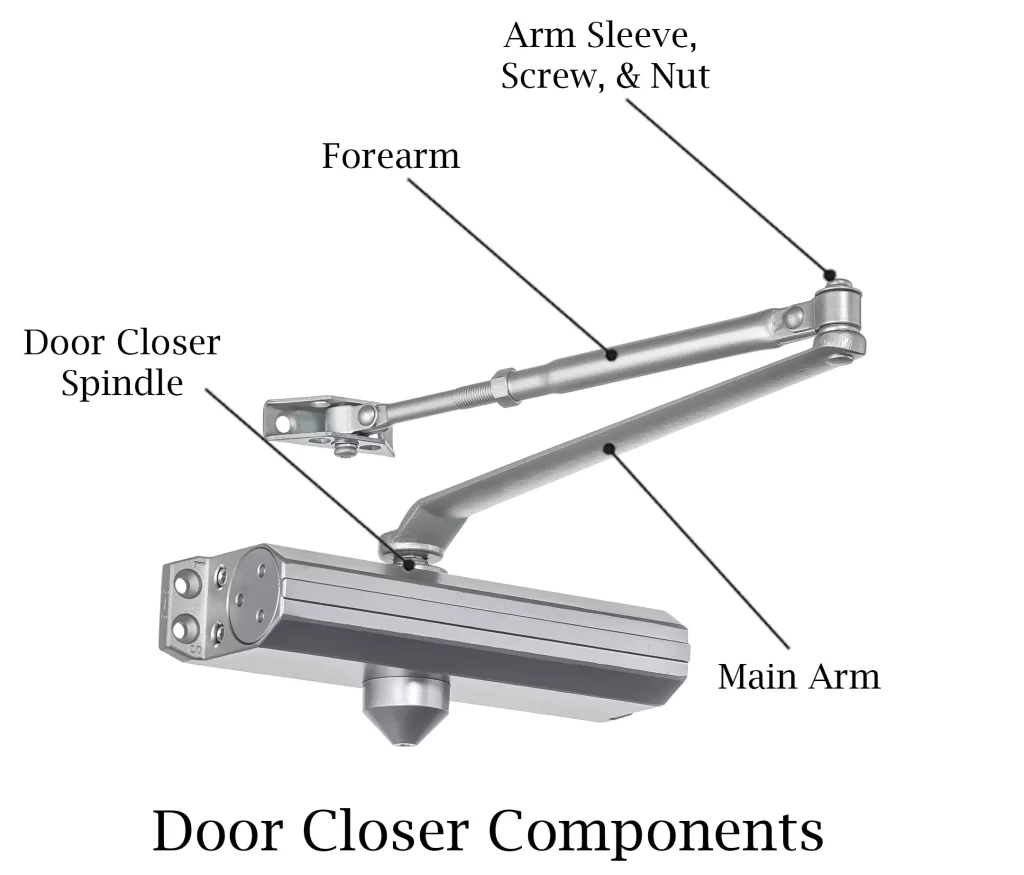
Door Closer Body
The main housing contains the hydraulic fluid, springs, and valves. When someone opens the door, the internal spring is compressed, storing potential energy. As the door is released, this energy drives the closing motion.
Hydraulic System
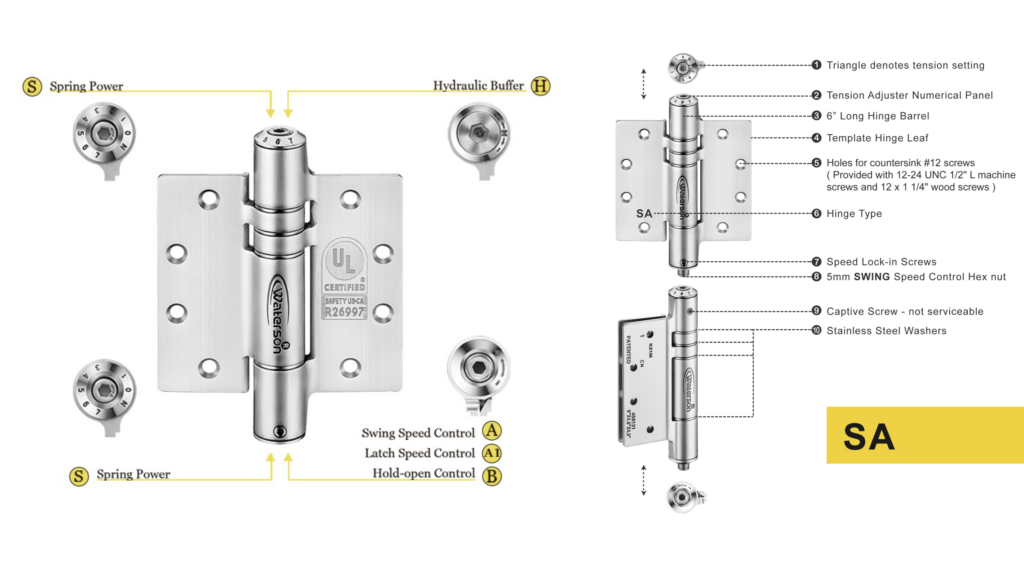
The hydraulic fluid flows through adjustable valves. These valves control:
- Closing speed – how fast the door moves from fully open to almost closed
- Latching speed – the final, slightly stronger push that ensures proper latching
This system prevents slamming and provides consistent, smooth motion.
Arm or Sliding Track
Connects the closer body to the door or frame. It transmits the stored spring energy to close the door.
Hinges or Self-Closing Hinges
Self-closing hinges contain built-in springs that pull the door shut. These are common in lightweight doors such as cabinets or bathroom stall doors.
Optional Features
Depending on the model, a self-closing door may include:
- Backcheck – slows the door before it hits the fully open position
- Delayed action – keeps the door open longer for accessibility
- Hold-open device – keeps the door open until manually released
- Fire-rated control – ensures the door automatically closes during emergencies
Step-by-Step Operation
Opening the Door
When the door is pushed or pulled open, the internal spring or hydraulic unit compresses and stores energy.
Releasing the Door
Once released, the stored energy begins closing the door.
Controlled Closing
Hydraulic valves regulate the speed so the door closes smoothly and safely without slamming.
Final Latching
Increased force in the final few degrees ensures the door fully latches, improving security, insulation, and fire protection.
Why Self-Closing Doors Are Required
Self-closing door systems are commonly used in:
- Fire-rated entries
- Commercial buildings
- Industrial facilities
- Hotels, hospitals, and public institutions
- Residential main doors or energy-efficient structures
They help maintain:
- Fire compartmentation
- Noise and climate control
- Security
- Hygiene and contamination management
Conclusion
Self-closing doors are an essential component of modern building safety and convenience. Their automatic closing mechanism ensures consistent performance, enhances fire protection, improves security, and contributes to overall energy efficiency. Whether used in commercial buildings, homes, or industrial environments, self-closing doors provide a reliable solution for controlled and safe door operation.
For product inquiries, technical consultation, or partnership opportunities, please contact Teeky International at msgigifok@foxmail.com.